The Impact of Automation on Aerospace Compression Molding Manufacturers
Understanding Aerospace Compression Molding
Overview of Compression Molding in Aerospace
Aerospace compression molding stands as a cornerstone process for producing high-performance components that withstand extreme conditions. Manufacturers rely on this technique to shape materials under heat and pressure, creating parts like gaskets, seals, and structural elements essential for aircraft and spacecraft. In the aerospace industry, compression molding delivers unmatched durability and precision, far surpassing alternatives such as plastic injection molding or plastic extrusion for certain applications. Aerospace compression molding manufacturers prioritize this method because it ensures tight tolerances and resistance to heat, vibration, and chemicals. Companies specializing in compression molding services for aerospace often integrate it into their core offerings, addressing demands for lightweight yet robust parts. This process begins with placing raw material into an open mold, then closing it with a hydraulic press to apply force, allowing the material to flow and cure. Such reliability makes compression molding indispensable for aerospace products manufacturing, where failure is not an option. Advanced aerospace compression molding techniques now incorporate computer-aided design to optimize mold shapes, reducing waste and enhancing efficiency. As aerospace manufacturing evolves, these manufacturers continue to refine processes, meeting stringent standards set by regulatory bodies. The result? Components that power everything from commercial jets to military drones, proving compression molding's vital role in modern aviation.
Key Materials Used: Elastomers and Thermosets
Elastomers and thermosets dominate the material landscape in aerospace compression molding, offering unique properties tailored to demanding environments. Elastomers, such as rubber compounds, provide flexibility and sealing capabilities, ideal for gaskets that prevent leaks of oil or gas in engines. These materials excel in compression molding because they cure into resilient forms that absorb shocks and maintain integrity under pressure. Thermosets, on the other hand, harden irreversibly during the molding process, delivering superior strength and heat resistance for structural composites. Aerospace compression molding manufacturers frequently select thermoset plastics for their ability to endure temperatures exceeding 300 degrees Fahrenheit without degrading. Key players in this field, like those offering compression molding supply, blend these materials to meet specific aerospace needs, such as lightweight panels or insulating components. The choice between elastomers and thermosets hinges on the application's requirements—elastomers for dynamic seals, thermosets for rigid housings. Innovations in material science push boundaries, with hybrid formulations enhancing fire retardancy and corrosion resistance. Manufacturers of aerospace compression molding must navigate supply chain complexities to source high-purity elastomers and thermosets, ensuring consistency across batches. This focus on quality materials underpins the reliability of aerospace molding, supporting the industry's push toward sustainable, high-performance solutions.
The Role of Hydraulic Presses in Compression Molding
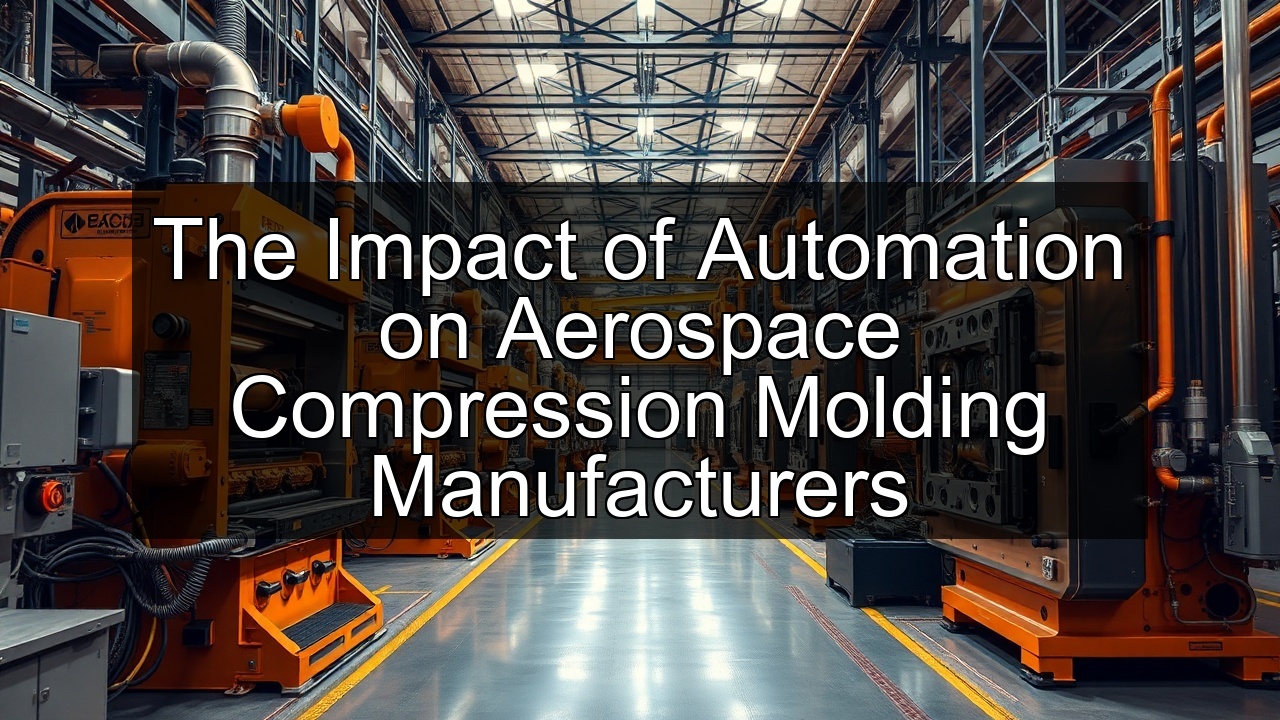
Hydraulic presses drive the compression molding process in aerospace, applying uniform pressure to form complex shapes with precision. These machines, central to every aerospace compression molding manufacturer, use fluid power to generate forces up to thousands of tons, ensuring materials conform perfectly to mold cavities. In aerospace manufacturing, hydraulic presses excel at handling thermosets and elastomers, curing them into parts like bushings or mounts that endure extreme stresses. Unlike mechanical presses, hydraulic versions offer adjustable stroke lengths and speeds, allowing customization for high-performance aerospace molding. Operators monitor pressure closely to avoid defects, integrating sensors for real-time adjustments. Leading compression molding manufacturers invest in advanced hydraulic systems that reduce cycle times by 20-30%, boosting throughput without compromising quality. For aerospace components, this means faster production of critical items such as fuel system gaskets, where even minor imperfections could lead to catastrophic failures. Maintenance of these presses remains crucial; regular calibration prevents downtime and upholds tolerances vital for aerospace standards. As automation integrates with hydraulic technology, presses evolve into smart systems, predicting wear and optimizing energy use. This synergy propels aerospace compression molding services forward, enabling manufacturers to deliver innovative solutions that meet the sector's rigorous demands.
The Role of Automation in Aerospace Manufacturing
How Automation Enhances Production Efficiency
Automation revolutionizes production efficiency for aerospace compression molding manufacturers by streamlining workflows and minimizing human error. Robotic arms load materials into molds, while automated controls regulate temperature and pressure, cutting cycle times from hours to minutes. In aerospace manufacturing, this efficiency translates to higher output of precision parts like seals and composites, meeting surging demands from commercial and defense sectors. Manufacturers adopting automation report up to 40% gains in productivity, as systems operate 24/7 with consistent results. Automation also optimizes material usage, reducing waste in processes involving elastomers and thermosets. For an aerospace compression molding manufacturer, integrating these technologies means faster prototyping and shorter lead times, crucial in a competitive market. Software-driven automation tracks every stage, from mold preparation to final inspection, ensuring traceability throughout the product lifecycle. This not only boosts efficiency but also lowers costs, allowing firms to offer competitive compression molding services. As aerospace industry trends lean toward digital twins and predictive analytics, automation positions manufacturers to scale operations seamlessly. The payoff? Reliable supply of high-quality aerospace products, reinforcing trust with major clients like aircraft builders.
Automation Technologies in Molding Processes
Automation technologies transform molding processes in aerospace, embedding sensors, AI, and robotics into every step. Vision systems inspect molds for defects before loading, while automated feeders dispense exact amounts of liquid silicone rubber or thermosets, preventing overfills. In compression molding, servo-driven hydraulic presses adjust parameters dynamically, achieving tolerances as tight as 0.001 inches—essential for aerospace components. Aerospace compression molding manufacturers leverage PLCs (programmable logic controllers) to orchestrate multi-station lines, where parts move via conveyor belts to curing ovens. This integration outpaces traditional methods like manual plastic injection molding, offering scalability for custom aerospace molding solutions. IoT-enabled devices monitor equipment health, alerting technicians to potential issues before they halt production. For high-performance aerospace molding, collaborative robots (cobots) assist in demolding delicate composites, reducing damage risks. These technologies also facilitate data analytics, helping manufacturers refine designs and predict maintenance needs. As automation evolves, it incorporates machine learning to optimize energy consumption, aligning with sustainability goals in aerospace manufacturing. The result empowers compression molding manufacturers to deliver innovative, efficient services that drive industry progress.
Case Study: Lockheed Martin's Automation Integration
Lockheed Martin, a titan in the aerospace corporation landscape, exemplifies automation integration in compression molding through its advanced manufacturing facilities. The company overhauled its production lines for F-35 components, deploying robotic systems to handle elastomer gaskets and thermoset composites. Automation slashed assembly times by 35%, enabling faster delivery of critical parts like seals that withstand jet engine pressures. Lockheed Martin's approach involved partnering with specialized aerospace compression molding manufacturers to customize automated hydraulic presses, ensuring seamless compatibility with existing workflows. Sensors embedded in molds provided real-time feedback, maintaining precision tolerances amid high-volume runs. This initiative not only enhanced efficiency but also improved quality control, reducing defects in aerospace products manufacturing by 25%. By incorporating AI for predictive scheduling, Lockheed Martin optimized its supply chain, minimizing delays in sourcing materials like liquid silicone rubber. The success story highlights how automation bridges traditional compression molding with modern demands, setting benchmarks for other aerospace manufacturers. Lessons from this case underscore the value of collaborative innovation, where corporations like Lockheed Martin lead the charge toward automated, resilient manufacturing ecosystems.
Quality Control and Tolerances in Aerospace Molding
Importance of Quality Control in Aerospace Products
Quality control anchors aerospace molding, safeguarding the integrity of every component from gaskets to structural composites. In an industry where parts face supersonic speeds and thermal extremes, rigorous checks prevent failures that could endanger lives. Aerospace compression molding manufacturers implement multi-layered protocols, starting with raw material inspections for elastomers and thermosets to verify purity and consistency. Non-destructive testing, like ultrasonic scans, detects internal flaws in cured parts, ensuring they meet FAA standards. This meticulous approach extends the product lifecycle, reducing recalls and maintenance costs for end-users. Leading compression molding services providers use statistical process control to monitor variations, maintaining uniformity across batches. For aerospace manufacturing, quality control fosters innovation by allowing confident experimentation with advanced materials. Documentation trails every step, providing audit-ready information that builds client trust. As global supply chains complicate sourcing, robust quality measures mitigate risks from contaminants in oil or gas-exposed components. Ultimately, exemplary quality control elevates an aerospace compression molding manufacturer from supplier to strategic partner, driving excellence in high-stakes applications.
Precision Tolerances for Aerospace Components
Precision tolerances define aerospace components, demanding sub-millimeter accuracy in compression molding to ensure seamless integration. Manufacturers target deviations under 0.005 inches for parts like hydraulic fittings or seals, where even slight mismatches amplify stresses in flight. Aerospace compression molding excels here, as the process inherently controls material flow for uniform thickness. Custom molds, crafted with CNC machining, achieve these tolerances, accommodating complex geometries in thermoset plastics. Tolerances vary by application—tighter for engine mounts, looser for non-critical housings—but all adhere to AS9100 certifications. Aerospace molding specialists calibrate hydraulic presses to sustain pressure, preventing warpage during curing. Dimensional verification tools, such as CMMs (coordinate measuring machines), confirm specs post-molding, flagging outliers for rework. This precision supports lightweight designs, optimizing fuel efficiency in aircraft. Challenges arise with elastomers, which can shrink unevenly, but advanced simulation software predicts and corrects these issues. For an aerospace compression molding manufacturer, mastering tolerances unlocks opportunities in precision compression molding for aerospace, meeting the exacting needs of innovators like satellite builders.
Technology Innovations in Quality Assurance
Technology innovations in quality assurance elevate aerospace molding to new heights, blending AI, 3D scanning, and blockchain for unparalleled reliability. AI algorithms analyze production data in real-time, predicting defects in compression-molded composites before they occur. 3D laser scanners map part surfaces with micron accuracy, verifying tolerances against digital twins of molds. In aerospace compression molding manufacturers' facilities, automated optical inspection systems scan for surface imperfections on gaskets, far surpassing manual methods. Blockchain secures supply chain transparency, tracking thermosets from source to finished product, ensuring compliance with aerospace standards. These tools integrate with ERP systems, streamlining information flow and reducing errors in quality reporting. For high-performance aerospace molding, augmented reality aids inspectors in spotting hidden flaws during assembly. Innovations like inline spectroscopy detect material inconsistencies in liquid silicone rubber, preventing batch failures. As technology advances, it democratizes quality assurance, allowing smaller compression molding manufacturers to compete with giants. This forward momentum not only assures safety but also accelerates certification processes, propelling the aerospace industry toward efficient, trustworthy manufacturing.
The Impact of Advanced Materials on Aerospace Compression Molding
Liquid Silicone Rubber and Its Applications
Liquid Silicone Rubber (LSR) reshapes aerospace compression molding with its superior flowability and thermal stability, ideal for intricate seals and insulators. This advanced material injects easily into molds, curing rapidly under heat to form flexible yet durable parts that resist oils, gases, and temperatures up to 500 degrees Fahrenheit. Aerospace compression molding manufacturers favor LSR for applications like O-rings in fuel systems, where it outperforms traditional elastomers in longevity. The two-shot molding process combines LSR with rigid substrates, creating hybrid components for avionics housings. Its biocompatibility suits interior aerospace products, reducing allergen risks. Processing LSR demands precise control of hydraulic presses to avoid voids, but yields lightweight parts that enhance aircraft efficiency. Innovations in LSR formulations add flame retardancy, meeting stringent fire safety regs. For compression molding services, LSR opens doors to custom aerospace molding solutions, enabling rapid prototyping for drone manufacturers. As supply chains stabilize, availability of high-grade LSR empowers manufacturers to innovate, delivering components that withstand space-like vacuums or hypersonic speeds.
Exploring MCM Composites in Aerospace Manufacturing
MCM Composites, LLC, pioneers advanced composites in aerospace manufacturing, specializing in compression-molded panels that blend strength with reduced weight. Their proprietary thermoset matrices, reinforced with fibers, produce radomes and fairings that endure radar and aerodynamic forces. As an aerospace compression molding manufacturer, MCM Composites integrates automation for consistent fiber alignment, achieving tolerances critical for stealth technology. These composites outperform metals in corrosion resistance, extending part life in harsh environments. Collaboration with major OEMs like Lockheed Martin highlights their role in supplying custom components for next-gen aircraft. MCM's processes minimize voids through vacuum-assisted compression, ensuring structural integrity. Exploring MCM Composites reveals how they tackle challenges like scalability, using modular molds for varied production runs. Their focus on sustainable resins aligns with industry green initiatives, recycling scraps into new batches. For aerospace composite molding manufacturers, MCM sets standards in innovation, offering insights into hybrid materials that merge thermosets with thermoplastics. This expertise drives efficiency, positioning MCM Composites as a key player in the evolving landscape of high-performance aerospace molding.
The Future of Thermoplastics in Compression Molding
Thermoplastics promise a dynamic future in compression molding for aerospace, offering recyclability and design flexibility that thermosets can't match. High-temperature variants like PEEK withstand engine proximity, molding into gears and brackets with snap-fit features. Aerospace compression molding manufacturers experiment with these materials to create weldable assemblies, simplifying repairs over adhesives. Compression techniques adapt by preheating thermoplastics for better flow, achieving complex shapes without excessive pressure. This shift reduces environmental impact, as thermoplastics reprocess easily, supporting circular economies in aerospace manufacturing. Future advancements include nano-filled thermoplastics for enhanced conductivity in electrical components. Challenges like higher melt viscosities spur innovations in hybrid presses combining compression with extrusion elements. For an aerospace molder, embracing thermoplastics means diversifying beyond traditional elastomers, capturing markets in urban air mobility. Projections show thermoplastics comprising 30% of composite parts by 2030, driven by cost savings and performance gains. This evolution equips manufacturers to deliver sustainable, high-tolerance solutions, redefining compression molding's role in aerospace innovation.
The Future of Aerospace Compression Molding Manufacturers

Trends in Automation and Supply Chain Management
Trends in automation and supply chain management reshape aerospace compression molding manufacturers, fostering resilient operations amid global disruptions. AI-powered forecasting optimizes inventory of elastomers and molds, preventing shortages that delay production. Blockchain enhances traceability, verifying material origins for compliance in aerospace products manufacturing. Automation trends include cobots handling demolding, paired with digital twins simulating entire workflows for efficiency gains. Supply chain strategies emphasize localization, with manufacturers building domestic networks for hydraulic components and composites. This reduces lead times for compression molding services, vital for just-in-time aerospace deliveries. Sustainability trends push automated recycling of thermoset scraps, minimizing waste. Data analytics trends predict demand spikes, allowing proactive scaling. For aerospace compression molding manufacturers, these evolutions mean agile responses to market shifts, like rising electric propulsion needs. Collaborative platforms connect suppliers, streamlining information exchange. As automation deepens, it integrates with 5G for real-time monitoring, ensuring uninterrupted flows. These trends position manufacturers to thrive, balancing innovation with reliability in a complex supply landscape.
Custom Aerospace Molding Solutions for Manufacturers
Custom aerospace molding solutions empower manufacturers to tailor compression processes for unique client specs, from prototype seals to mass-produced composites. Aerospace compression molding manufacturers design bespoke molds using CAD, accommodating tolerances for specialized applications like satellite housings. This flexibility shines in low-volume runs, where hydraulic presses adjust for varying material thicknesses. Partnerships yield solutions integrating LSR with MCM Composites for multifunctional parts, enhancing vibration damping. Custom services extend to post-molding finishes, like plasma treatment for better adhesion. For aerospace manufacturers seeking high-performance options, these solutions provide end-to-end support, from concept to certification. Rapid tooling advancements cut development times, accelerating market entry. Emphasizing modularity, custom molds swap inserts for quick adaptations. This approach addresses related needs in precision compression molding for aerospace, offering scalability without quality trade-offs. As demands grow for lightweighting, custom solutions innovate with hybrid techniques blending compression and injection molding. Ultimately, they solidify manufacturers' roles as innovators, delivering value through precision and adaptability.
Challenges and Opportunities in the Aerospace Industry
Challenges in the aerospace industry test compression molding manufacturers, from regulatory hurdles to material volatility, yet opportunities abound in emerging tech. Supply chain bottlenecks for advanced materials like thermoplastics demand diversified sourcing, while skilled labor shortages push automation adoption. Environmental regs challenge traditional thermosets, urging eco-friendly alternatives. However, opportunities emerge in sustainable aviation, where compression molding crafts bio-based composites for greener aircraft. The boom in space tourism opens markets for high-tolerance gaskets in reusable rockets. Digitalization offers chances to integrate VR for mold design reviews, speeding iterations. For an aerospace compression molding manufacturer, navigating tariffs on imported hydraulics presents a pivot to local fabrication. Opportunities in additive manufacturing hybridize with compression for intricate internals. Workforce upskilling in AI tools unlocks efficiency gains. Balancing these, manufacturers who invest in R&D seize leadership in custom aerospace molding solutions. The industry's growth to $1 trillion by 2040 amplifies prospects, rewarding agile players who turn challenges into competitive edges through innovation and resilience.